“Some in the Midwest ‘see themselves as this kind of climate haven…They are just more insulated from extreme weather events,’ he said, adding that the Midwest—which is relatively cheap and up-and-coming—is ‘like investing in Brooklyn in the 90s.’” - Jay Lipman, Managing Partner, Resilience Investments

The Wall Street Journal and Realtor.com’s Summer 2025 Housing Report found that the Top 20 performing markets are in the Midwest and Northeast. The report specifically highlighted affordability as climate resilience for the strong performance of these markets even as many Sun belt markets struggle.

The Economist warns that climate change is set to erase $25 trillion in global home value by 2050. Rising insurance costs and mounting physical risks are already pressuring homeowners and markets—signaling an accelerating repricing that will reward climate-resilient regions while exposing vulnerabilities elsewhere.

Climate-driven shocks are emerging as the most likely catalyst for the next financial crisis. Escalating losses from floods, fires and storms are eroding property values, straining insurers and exposing gaps in how banks and lenders price long-term risk. As insurance retreats and real-estate markets in vulnerable regions weaken, the financial system faces growing instability - driven not by excess leverage, but by accelerating physical-climate impacts and declining asset resilience.

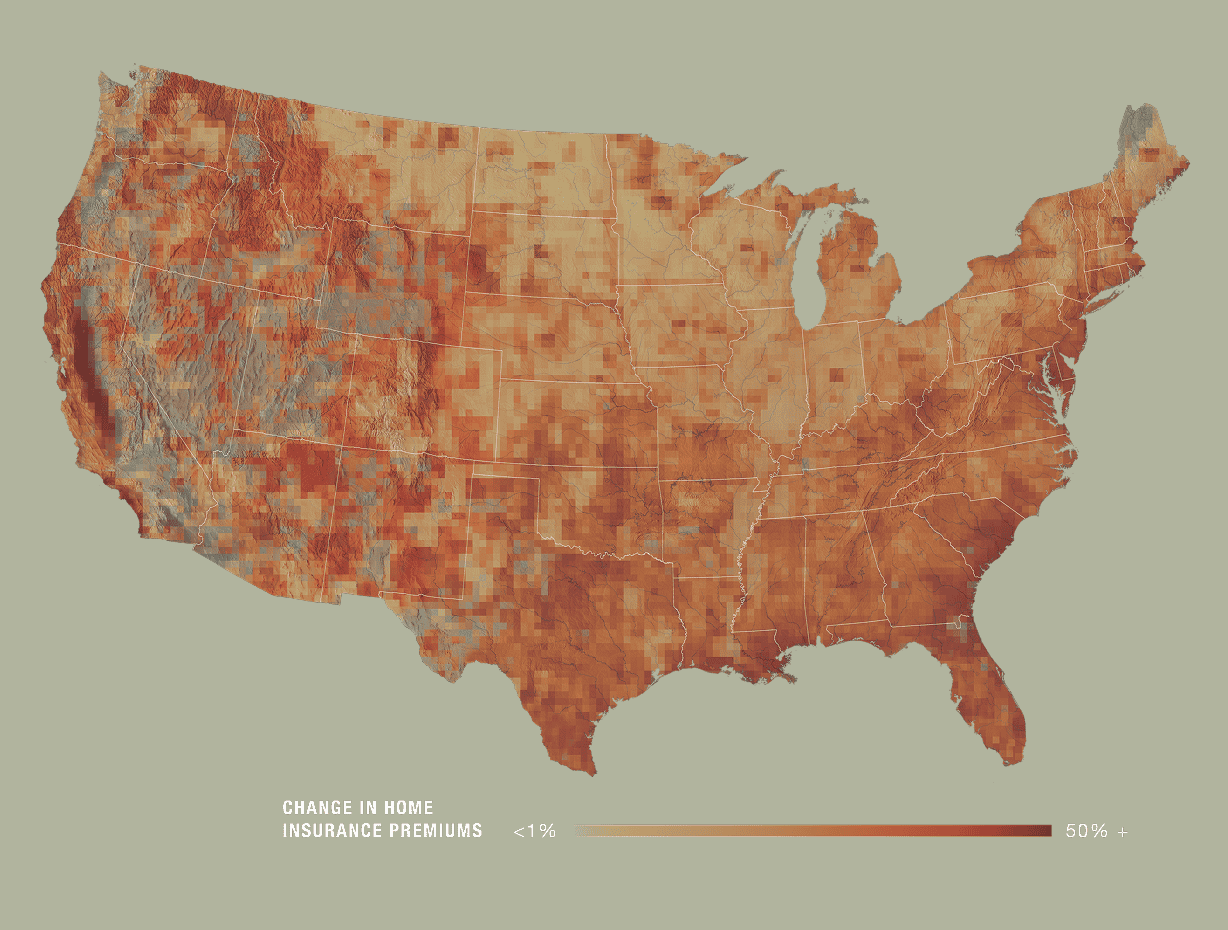
Rising home-insurance premiums in disaster-exposed ZIP codes are dragging down property values, according to new data. Since 2018, homes in these high-risk areas have sold for an average of about $43,900 less than comparable homes elsewhere.

Home-insurance premiums are rising sharply in U.S. regions exposed to hurricanes, wildfires and hail, squeezing affordability for homeowners. In highly exposed areas, insurance now takes up more than one-fifth of total housing costs and in places like Orleans Parish, Louisiana, nearly 30 percent.